




How to Get Rid of Silverfish in the Bathroom
You switch on the bathroom light in the evening and there goes another one: a small silver-grey creature darting into a gap by the skirting board. Silverfish are harmless, but they feel unhygienic, and where you see one there are usually more.
In this guide you will learn why silverfish keep coming back, what you can do about the cause yourself and how to deal with them for good.
What are silverfish and why are they in the bathroom?
Silverfish are small, wingless insects about a centimetre long, with a silvery scaled body and long antennae. They are nocturnal and love three things: moisture, warmth and darkness. That is why you find them mainly in the bathroom, kitchen, cellar and utility room, and almost always only when you switch on the light at night.
They feed on starch and sugar. That is found in paper, wallpaper paste, cardboard, bookbinding glue, crumbs and even the sizing in textiles. A damp bathroom with a few gaps, a pile of old magazines and a perished sealant joint gives them everything they need.
Why silverfish are so persistent
Many people squash one now and then and assume the problem is getting smaller. In practice little changes, for three reasons:
- They live a long time. A silverfish lives two to eight years and can survive for months without food. The few you see are only a fraction of what is hiding behind skirting boards and tiles.
- They hide where you cannot reach. Behind the washbasin, under the bath, in the void behind the tiles and in the gaps around pipework. No spray can gets there.
- The cause remains. As long as the room is damp and there is food around, new ones keep arriving. A silverfish problem is almost always a sign that the bathroom is too humid.
What you can do about the cause
Treating without removing the cause is a losing battle. Start here:
- Ventilate the bathroom. Let the extractor fan run for fifteen minutes after showering or open a window. A hygrometer helps: below 50 percent humidity, silverfish do not feel at home.
- Fix leaks and gaps. Replace perished sealant, seal gaps at skirting boards and pipe entries, and check whether a pipe is sweating or leaking anywhere.
- Remove the food. No piles of magazines, cardboard or toilet rolls in the bathroom. Store them in sealed boxes in a dry place.
- Vacuum regularly. Especially along skirting boards and in corners, where scales, eggs and crumbs collect.
These steps make the bathroom unattractive. They do not, however, remove the silverfish that are already there.
Why single remedies disappoint
The well-known home remedies usually help only a little:
- Sticky traps. Catch a few that happen to pass by. Useful for gauging the size of the problem, not for solving it.
- Spray cans and powders. Work only where you apply them, and precisely not behind the tiles and under the bath where the colony lives. Besides, you would rather not spray them in a room you stand in every day.
- Bay leaves, lavender and cucumber peel. Old tips, but silverfish take little notice of them in practice.
The pattern is always the same: these remedies tackle one spot or one moment, while silverfish spread through the whole room and come out again every night.
Dealing with silverfish for good with an automatic dispenser
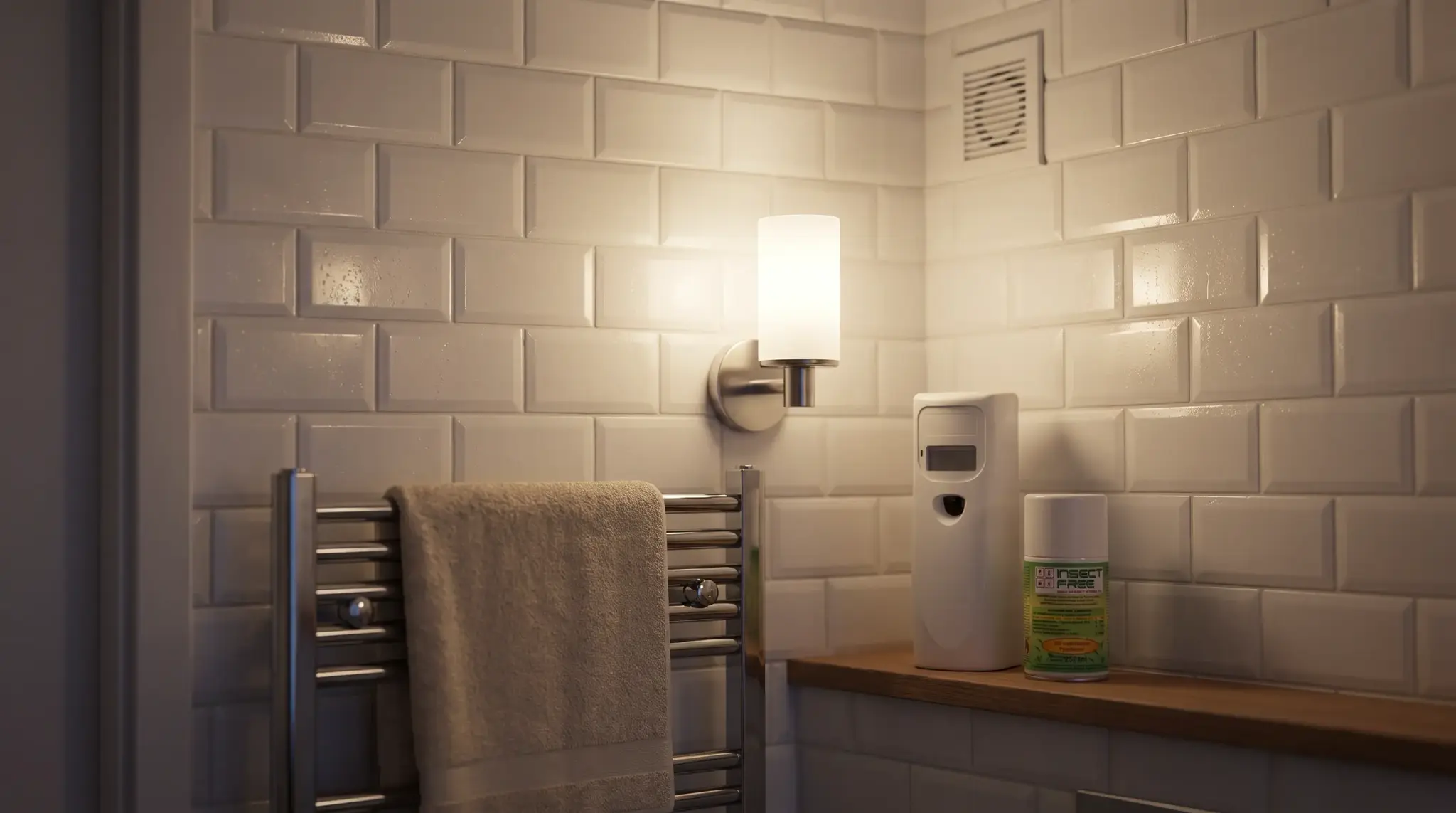
Precisely because silverfish are spread out and active at night, an approach that reaches the whole room continuously works better than a spray can in your hand. The automatic dispenser against silverfish from Insect Free releases a fine mist into the room at set intervals. You set it once and mount it high on the wall; after that it works day and night, including the moments when silverfish come out of hiding.
For a damp room such as a bathroom or cellar, choose an Extra Strong set: a dispenser with an Extra Strong refill, ready to use. One refill lasts up to thirty days with normal use; after that you swap it for an Extra Strong refill. When used as directed and positioned according to the instructions, the dispenser is safe for people and pets.
Combine this with the ventilation and sealing tips above. That way you deal with the silverfish that are there and make the bathroom unattractive to new ones.
Frequently asked questions
Are silverfish dangerous or harmful?
Not to people or pets: they do not bite or sting and do not transmit disease. They can damage paper, books, wallpaper and textiles, and their presence usually points to a damp problem you will want to fix.
What is the difference between silverfish and paper silverfish?
They look very alike. Silverfish need moisture and live in bathrooms and kitchens. Paper silverfish are slightly larger, have longer antennae and can also live in dry rooms such as the living room or loft. The approach with a dispenser is the same for both.
Why do I only see silverfish at night?
Silverfish are nocturnal and avoid light. During the day they hide behind skirting boards, tiles and under the bath. That is why an approach that reaches the whole room continuously is more effective than something you only apply in one spot during the day.
How quickly will I be rid of silverfish?
With a combination of ventilating, sealing gaps and an automatic dispenser, you usually notice a clear reduction within a few weeks. Because silverfish live long and leave eggs behind, keep the dispenser running for a few months.
Had enough of silverfish in the bathroom? See the solution at get rid of silverfish and choose the set that suits your room.