




Mice Chewing on Cables? How to Prevent Gnawing Damage
As soon as it gets colder outside, mice and rats look for a warm, dry place. That is often your meter cupboard, crawl space, shed or even the engine bay of your car. The problem is not just that they are there, but what they do there: chew. On cables, pipes and plastic.
In this guide you will learn why rodents come indoors in autumn in particular, where the damage occurs and how to protect cables and pipes.
Why mice and rats come indoors in autumn
Outside it gets colder and wetter, and food becomes scarcer. A mouse fits through a gap of one centimetre, a rat through a hole of two. A gap under a garage door, a pipe entry or a ventilation grille without mesh is enough. Once inside, they find warmth, shelter and often food, and then they stay.
What you notice: rustling in the crawl space or behind skirting boards, small dark droppings, gnaw marks on cardboard or wood, and sometimes a strange smell.
Why rodents chew on cables
It is not hunger. Rodents' front teeth grow throughout their lives, so they have to gnaw to keep them short. Cable insulation, PVC pipes and plastic covers are exactly hard enough for that. They also gnaw their way through anything in their path.
That causes damage you often notice late:
- Electrical cables. Chewed-through insulation causes short circuits or, in the worst case, fire. In the meter cupboard and behind appliances the risk is greatest.
- Data cables and internet. A damaged cable in the crawl space causes faults you may not trace for a long time.
- Pipes. Plastic water pipes and drains can start to leak.
- Cars and vehicles. Wiring looms, hoses and insulation in the engine bay are a well-known target, especially for cars that are parked outside or rarely driven.
- Stables, sheds and animal housing. Rodents are nearby all year round here and cables are often exposed.
What you can do yourself
- Seal the entry points. Check the outside of the house for gaps, pipe entries and grilles. Use steel wool or fine mesh; expanding foam on its own gets chewed away quickly.
- Remove the food. Store pet food, bird seed and supplies in sealed containers. Sweep up crumbs and do not leave bin bags outside.
- Clear hiding places. Piles of wood, cardboard and clutter close to the wall are ideal nesting spots.
- Check vulnerable spots. Look regularly in the meter cupboard, by the boiler, in the crawl space and under the bonnet for gnaw marks.
These steps make the house less attractive. They do not, however, protect the cables already in place, and that is exactly where the expensive damage occurs.
Protecting cables and pipes with Hocus Topus
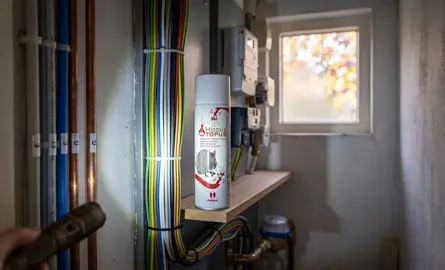
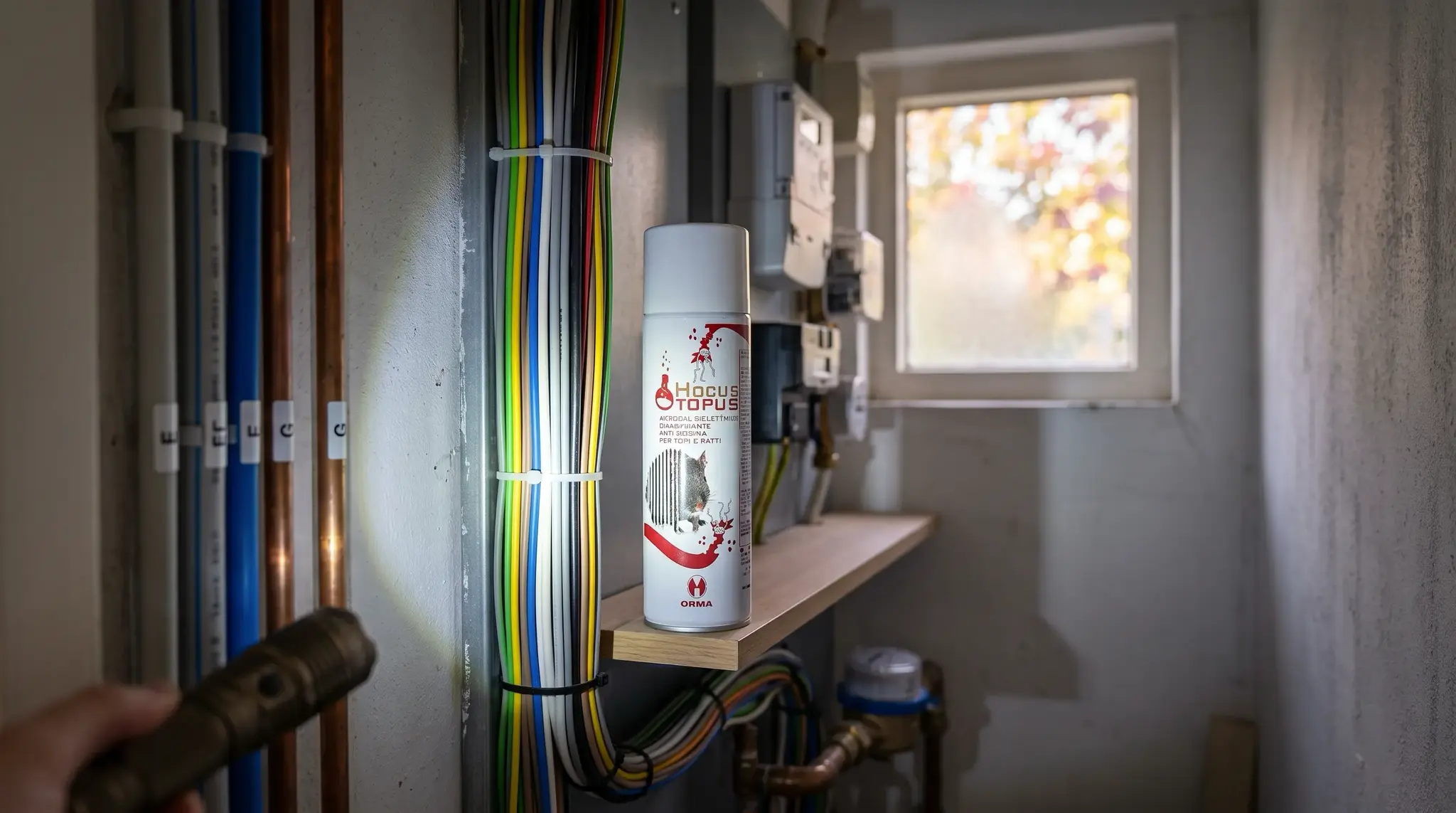
For the places where you cannot keep rodents out completely, protect the cables themselves. Hocus Topus is a spray that leaves a bitter layer on cables, pipes and plastic. As soon as a mouse or rat bites into it, it tastes the bitter substance and stops gnawing. It therefore works not with poison but with taste: the animal is deterred before the damage is done.
How to use it:
- Clean the surface. Wipe dust and dirt off the cable or pipe so the layer adheres well.
- Spray evenly. From 15 to 20 centimetres away, along the full length that rodents can reach.
- Apply with the power off. Preferably spray when the cables are not live, because of the propellants. The spray itself is suitable for electrical cables.
- Repeat every four weeks. The effect lasts up to about four weeks, depending on moisture and temperature. If activity continues, apply a fresh layer.
Hocus Topus is suitable for electrical and data cables, pipes in crawl spaces and plant rooms, plastic covers and casings, and for stables and animal housing. Always follow the instructions on the packaging and keep the spray out of reach of children and pets.
What Hocus Topus does and does not do
To be clear: Hocus Topus does not catch mice and does not drive them out of your house. It protects what they can chew through. If you already have mice or rats indoors, combine the spray with sealing entry points and, for a larger infestation, with trapping or a pest controller. In the meantime, the spray ensures you do not end up with a short circuit, a leak or a damaged wiring loom.
Frequently asked questions
Does Hocus Topus work in the car as well?
Yes, the spray is suitable for wiring looms, hoses and plastic parts in the engine bay. Apply it to a cold, switched-off engine and repeat the treatment every four weeks, especially for cars parked outside or rarely driven.
How long does the protection last?
Up to about four weeks, depending on moisture, temperature and how much the surface is exposed. In a damp crawl space or outdoors it may be shorter; repeat the treatment sooner in that case.
Is Hocus Topus a poison for mice?
No. The spray works with a bitter taste that deters rodents as soon as they bite into it, not with a toxic substance they have to eat. Still keep the spray out of reach of children and pets and follow the instructions for use.
How do I know I have mice before I see damage?
Look out for small dark droppings, rustling in the evening, gnaw marks on cardboard or wood and greasy smear marks along skirting boards and cables. In autumn, check the meter cupboard, crawl space, shed and engine bay in particular.
Protect cables and pipes before something goes wrong? See Hocus Topus and the other solutions under rodents.